Babycare Products in India: Must-have Daily Essentials for your Baby
Explore essential babycare products in India, including gentle baby soap, baby shampoo and moisturisers. Learn how to choose safe, age-appropriate baby care.
By EMM Editors
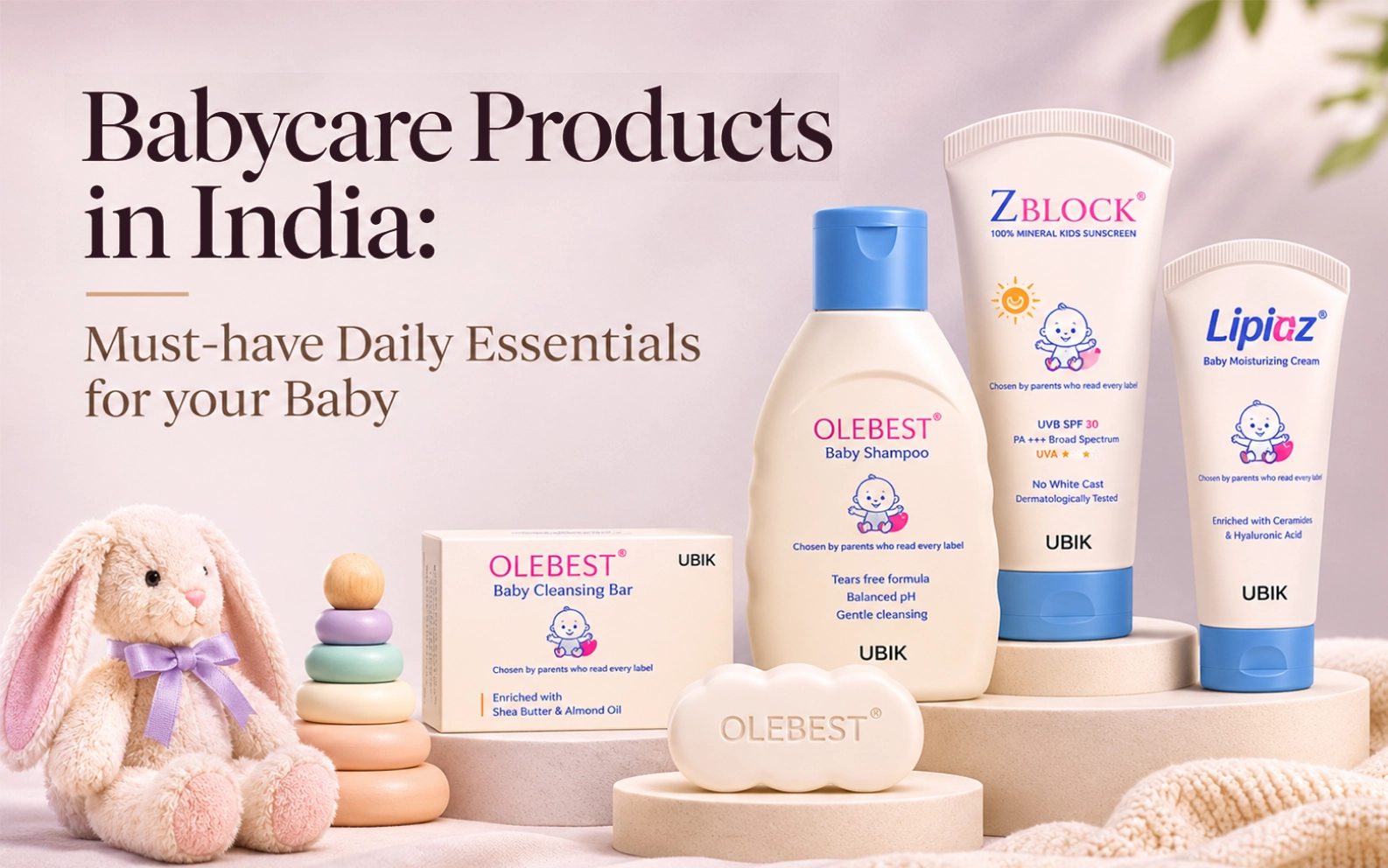
Your baby's barely arrived, and somehow the bathroom shelf is already overflowing with baby soaps, shampoos, lotions, massage oils, and bottles you can't remember buying. Sound familiar?
But here's something new parents rarely hear: your baby doesn't need a complicated skincare routine.
Their developing skin barrier needs gentle, age-appropriate care, not endless products. So, which babycare products deserve a place on that crowded shelf? Let's separate everyday essentials from things you can happily skip.
Which Babycare Products Does a Newborn Actually Need?
The baby shower gifts are still in their boxes, and you're wondering whether bath time really requires six different bottles. Good news: it doesn't.
What Belongs in a Basic Baby-Care Routine?
Start with these simple babycare products:
Baby soap or mild cleanser: For gently cleaning soiled skin.
Baby shampoo: For washing the scalp and hair when needed.
Baby moisturiser: To comfort dry skin and support moisture retention.
Baby massage oil: An optional extra for gentle massage and bonding.
Does Your Baby Need Every Product From Day One?
Not at all! Newborns generally need less cleansing than adventurous toddlers. And sunscreen for babies under six months? Prioritise shade and protective clothing. Buy for your baby's needs, not the nursery shelf.
Baby Soap vs Soap-Free Wash: What Should You Choose for Newborn Skin?
That lovely post-bath baby smell is hard to resist. But if your little one's skin feels dry afterwards, the cleanser deserves a closer look. After all, more bubbles don't necessarily mean a better bath.
Does a Newborn Need Soap at Every Bath?
Not really. Newborns aren't exactly rolling around in playground dust! For many early baths, plain lukewarm water is sufficient. When milk residue, spit-up, or nappy mess needs extra attention, a small amount of mild, age-appropriate cleanser can help. Frequent washing with harsh soaps may strip protective skin oils, leaving delicate skin dry or irritated.
What Makes a Baby Soap Gentle?
Look beyond the adorable packaging. Check for age suitability, mild cleansing ingredients, skin-friendly pH, and potential irritants such as fragrance. Traditional soaps tend to be more alkaline, while soap-free syndet cleansers are often gentler.
Take Olebest Baby Soap, which lists Glycerine, Shea Butter, and Almond Oil. These ingredients have moisturising properties, although botanical ingredients alone don't guarantee gentleness. The real test? Your baby's skin should feel comfortable after bathing, not tight, itchy, or squeaky-clean.
What Does a Gentle Baby Bath Routine Actually Look Like?
One wriggling foot, a slippery elbow, and suddenly bath time feels like a juggling act! The secret isn't more babycare products. It's having everything ready before the first splash.
Before Bath Time: What Should You Prepare?
Keep a soft towel, clean clothes, lukewarm water, and a mild cleanser within reach. Make sure the room is comfortably warm, check the water temperature, and support your baby's head and neck throughout.
Until the umbilical cord stump falls off, stick to sponge baths unless your paediatrician advises otherwise.
During and After the Bath: What Matters Most?
Face first: Gently wipe with plain water.
Clean selectively: Use a little mild cleanser where needed.
Wash the scalp: Keep suds away from the eyes.
Rinse and dry: Pat gently, especially between skin folds.
Moisturise: Apply if skin feels dry.
One non-negotiable: Never leave your baby unattended in bathwater, even for a second.
When Should You Use a Baby Moisturiser After Bathing?
Those irresistibly soft baby cheeks can sometimes turn surprisingly rough. And no, dryness isn't always a sign that you're doing something wrong.
How Can You Tell Whether Baby Skin Needs More Moisture?
Watch for flaky patches, roughness, or skin that looks tight and uncomfortable. Air conditioning, chilly winter air, and frequent baths can make dryness worse.
A good moisturiser helps in three ways: attracting water, softening skin, and replenishing protective lipids. Applying it after bathing, while skin is slightly damp, helps retain moisture.
What If Your Baby Has Very Dry or Eczema-Prone Skin?
Lipidz Baby Moisturizing Cream combines SK Influx® V MB, Hymagic™ 4D, Shea Butter, and Sunflower Oil for barrier-focused moisturising care.
But persistent redness, itching, or cracked skin deserves medical attention. If you suspect eczema, consult your paediatrician or dermatologist rather than relying on moisturiser alone.
Is Baby Massage Oil Necessary or Just a Nice Addition?
Ask any Indian grandmother about maalish, and she'll probably have a favourite technique! It's a lovely bonding ritual, but baby massage is optional, not a shortcut to stronger bones or faster growth.
Use gentle strokes, follow your baby's cues, and stop if they seem uncomfortable. Never massage irritated or broken skin.
Choosing an oil? Olebest Baby Massage Oil combines Coconut, Sesame, Olive, Castor, and Sunflower Oils. Just remember, plant-based doesn't automatically mean irritation-free. Your baby's skin tolerance matters more than tradition.
How Should Parents Compare Babycare Product Labels and Prices in India?
That adorable packaging and big “100% natural” promise? Lovely, but neither tells you whether the product suits your baby. Before adding it to your basket, give the label thirty seconds.
Your 30-Second Babycare Product Checklist
Check | What parents should look for |
Age suitability | Clear newborn, infant or toddler instructions |
Ingredients | Full list, including fragrance and potential allergens |
Formulation | Gentle cleansing or moisturising purpose |
Claims | What “tear-free,” “natural,” “hypoallergenic” or “dermatologically tested” actually means |
Packaging | Expiry date, manufacturer details and intact seal |
Value | Quantity, price per ml/g and likely usage |
Expensive doesn't automatically mean gentler, and more ingredients don't necessarily mean better care.
Compare formulations and pack sizes in eMegamart India’s Baby Care collection before deciding what deserves shelf space.
The Best Babycare Routine Is Often the Simplest
Remember that bathroom shelf overflowing with bottles? Your baby probably needs far less than the labels suggest. A gentle cleanser for messy moments, shampoo when needed, moisturiser for dry skin, and an optional maalish for bonding. That's a thoughtful start.
Before buying, check age suitability, ingredients, and how your baby's skin responds. Explore babycare products at eMegaMart India to find everyday essentials that deserve a place on your little one's shelf.
Frequently Asked Questions
1. What Are the Essential Babycare Products for a Newborn in India?
A newborn typically needs only a few basic babycare products: a gentle cleanser when necessary, a mild baby shampoo for occasional scalp cleansing, and a moisturiser if the skin is dry.
Massage oil is optional, not an everyday necessity.
Rather than buying an entire skincare kit, start with essentials that suit your baby's age and skin condition. Explore eMegaMart's Baby Care collection to compare individual formulations.
2. When Can You Start Using Newborn Soap on a Baby?
A mild, age-appropriate newborn soap can be used when cleansing is needed, but plain lukewarm water is often sufficient during the earliest baths.
Before choosing a cleansing bar, check whether the manufacturer recommends it for newborns.
After the umbilical cord stump falls off and heals, regular bathing can begin. Keep cleansing gentle and avoid soap formulations that leave skin feeling tight or irritated.
3. How Often Should You Bathe a Newborn Baby?
Most newborns don't need a full bath every day. Two or three baths weekly are often sufficient, provided the nappy area and other soiled areas are cleaned regularly.
In India's warmer weather, bathing frequency may vary according to sweating, comfort and your paediatrician's advice.
Keep baths brief, use lukewarm water and avoid excessive cleansing that may dry out delicate skin.
4. Is Baby Soap Better Than a Soap-Free Cleanser for Sensitive Skin?
Soap-free cleansers, particularly mild syndet formulations, are often preferable for babies with dry or sensitive skin.
Traditional soap tends to have a higher pH, which can disturb the skin's protective barrier.
However, not every soap-free product is automatically gentle. Check the complete ingredient list, fragrance content and age instructions.
For babies with eczema-prone skin, ask your paediatrician which cleansing formulation would be appropriate.
5. Can You Use Regular Adult Soap on a Baby?
Regular adult soap is generally not the best choice for newborn skin. Some formulations contain stronger cleansing agents, fragrance or ingredients intended for adult skincare concerns.
These may be unnecessarily harsh for a baby's developing skin barrier.
Instead, look for a mild, age-appropriate baby cleanser. Olebest Baby Soap, for example, lists Glycerine, Shea Butter and Almond Oil. Check its complete label and your baby's tolerance before use.
6. How Do You Choose the Best Baby Shampoo in India?
The best baby shampoo is one that gently cleanses your child's scalp without causing dryness, stinging or irritation.
Check for mild cleansing agents, suitable pH, clear age instructions and potential irritants such as fragrance.
For example, Olebest Baby Shampoo contains Cocamidopropyl Betaine, Sodium Cocoamphoacetate and Glycerine.
Remember, a long list of natural ingredients or prominent “free-from” claims doesn't automatically make a shampoo better.
7. When Should You Start Using Baby Shampoo on a Newborn?
Baby shampoo becomes useful when your newborn's scalp and hair need more cleansing than plain water provides. There is no requirement to begin shampooing every day from birth.
During early sponge baths, gently cleaning the scalp with water may be sufficient.
Once regular bathing begins, use a mild infant shampoo when needed, following its age instructions and your paediatrician's guidance.
8. Is It Safe to Use Baby Shampoo Every Day?
Daily shampooing is usually unnecessary for newborns and young infants. Washing their hair once or twice weekly may be enough, depending on scalp condition and activity.
More frequent washing may be appropriate for older, active children or when recommended for a particular scalp condition.
If your baby's scalp becomes dry, flaky or uncomfortable, review the washing frequency and shampoo formulation rather than automatically adding another haircare product.
9. Does Tear-Free Baby Shampoo Mean It Cannot Irritate the Eyes?
No. “Tear-free” means a shampoo is formulated to minimise eye stinging, not that it can never cause irritation. Even a tear-free infant shampoo should be kept away from your baby's eyes. When washing the scalp, use a small amount, tilt the head gently backwards where practical, and rinse carefully.
If shampoo enters the eyes and causes discomfort, rinse with clean water.
10. Can You Use One Baby Shampoo for Both Hair and Body?
Yes, but only when the product is specifically labelled for use on both hair and body. A head-to-toe baby wash can simplify bath time and reduce the number of products parents need.
However, a shampoo intended solely for scalp cleansing shouldn't automatically be treated as a body cleanser. Check the product's intended use, age suitability and ingredient list before using it across multiple areas.
11. Does Baby Shampoo Help Newborn Hair Grow Faster or Thicker?
No shampoo has been reliably shown to make newborn hair grow faster or thicker. Baby shampoo primarily cleans the scalp and removes sweat, oil and buildup. It's also normal for babies to lose some of their initial hair during the first few months before new hair grows. Choose a gentle formulation for scalp comfort rather than buying products that promise unusually rapid hair growth.
12. Can Regular Baby Shampoo Help With Cradle Cap?
Gentle baby shampoo can help loosen and remove some of the scales associated with mild cradle cap. Use a soft baby brush to loosen flakes gently, without scratching or picking at the scalp.
Cradle cap is common and often improves over time. If the scalp becomes very red, swollen, weepy, uncomfortable or doesn't improve, consult a paediatrician before using medicated shampoos.
13. Should You Apply Baby Moisturiser After Every Bath?
A suitable moisturiser can help maintain skin comfort, particularly if your baby's skin becomes dry after bathing. Applying it while the skin is slightly damp can help retain moisture. For babies needing barrier-focused care, Lipidz Baby Moisturizing Cream contains SK Influx® V MB, Hymagic™ 4D, Shea Butter and Sunflower Oil. However, persistent itching, inflamed patches or cracked skin may require medical assessment.
14. Are Natural Baby Massage Oils Always Safe for Newborn Skin?
No. Natural or plant-based oils aren't automatically free from irritation or allergy risks. Traditional maalish can be a comforting bonding activity, but the oil should suit your baby's skin. Olebest Baby Massage Oil combines Coconut, Sesame, Olive, Castor and Sunflower Oils. Check the full ingredients, introduce products cautiously and avoid massaging broken or inflamed skin. Stop if your baby seems uncomfortable.
15. What Should You Do If a Baby Soap, Shampoo or Lotion Causes a Rash?
Stop using the suspected product and gently rinse it away. Avoid introducing several new babycare products while the skin is irritated. Watch for redness, itching, swelling or persistent discomfort. If symptoms continue, spread or recur, contact your paediatrician. Seek urgent medical help if your baby develops breathing difficulties or significant facial swelling. A product labelled “natural,” “hypoallergenic” or “dermatologically tested” can still cause an individual reaction.