Back Acne Treatment: Why Your Breakouts Keep Coming Back and What You Might Be Missing
Struggling with recurring back acne? Discover common causes, effective back acne treatments, salicylic acid sprays and tips to prevent future breakouts.
By EMM Editors · 2026-10-28
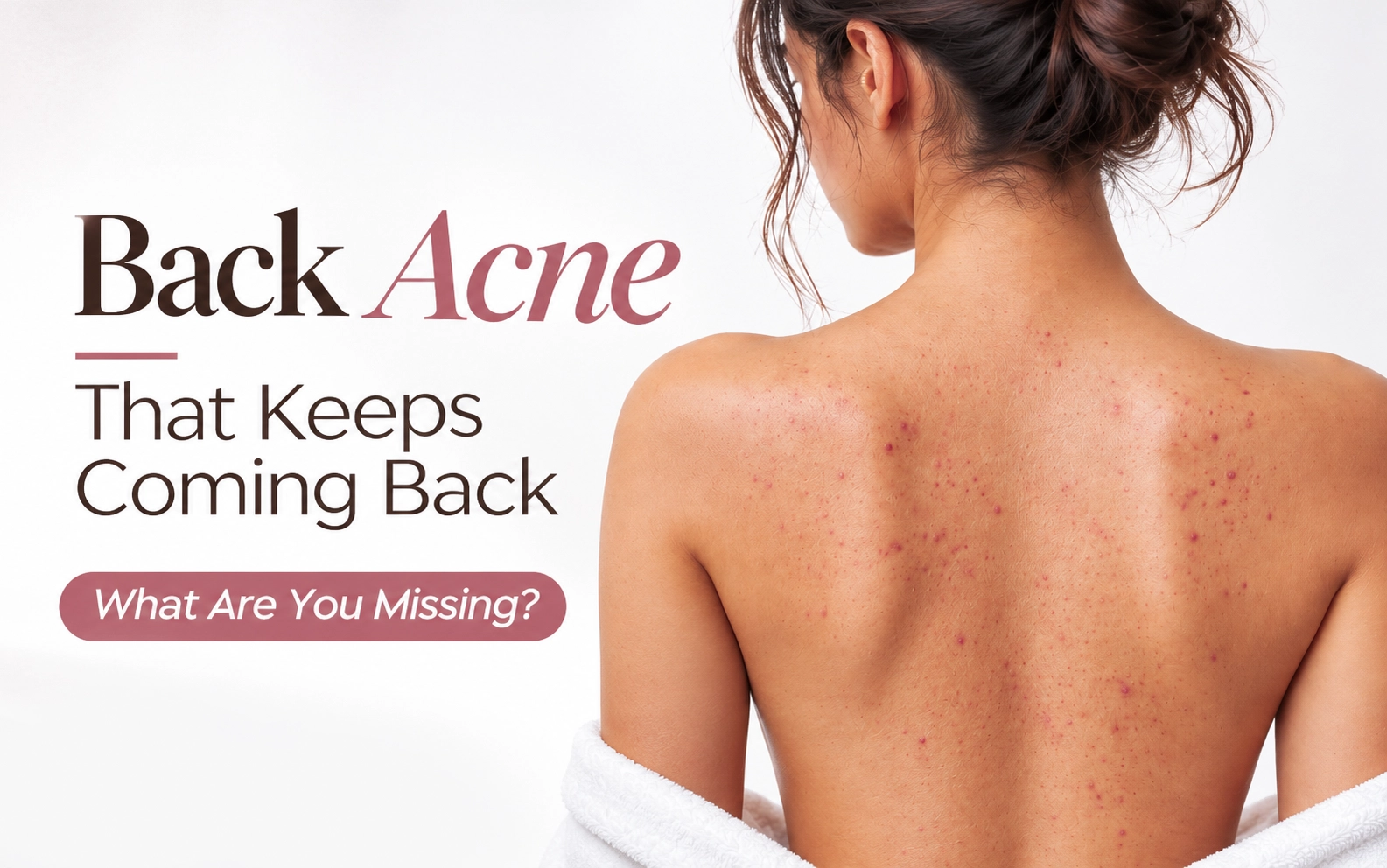
Your back clears up for a week, then those stubborn bumps show up again - just in time for a backless outfit or gym session. Sound familiar? Recurring body acne isn't always about poor hygiene. Sweat trapped under tight clothing, friction, pore-clogging products, and inconsistent routines can all play a part. The tricky bit? Not every bump responds to the same back acne treatment. If you're wondering how to get rid of back acne for good, start by understanding what's triggering the cycle - and which skincare steps actually help keep breakouts under control.
Why Does Your Back Acne Keep Coming Back Even After Treatment?
Those pimples on your back finally cleared, but a few weeks later, they're back. Frustrating? Absolutely. But recurring body acne doesn't necessarily mean poor hygiene or that your skincare has failed.
Which Situation Sounds Like Yours?
Acne never improved: Your treatment may need more time, a different approach, or the bumps might not be acne.
Acne cleared, then returned: Acne can be an ongoing condition that requires consistent maintenance, even after breakouts settle.
Breakouts follow workouts or product use: Sweat, friction or pore-clogging formulas may be contributing triggers.
Effective back acne treatment starts with recognising your breakout pattern, not constantly switching products.
Are You Treating Back Acne—or Something That Just Looks Like It?
You've tried an acne body wash, switched skincare products and stayed consistent with your routine. Yet those stubborn bumps refuse to leave. What if they aren't actually acne?
Not every breakout on your back is caused by clogged pores. Some acne-like bumps develop from inflammation or infection around hair follicles, meaning your usual back acne treatment might not address the real problem.
Back Acne vs Folliculitis: Why the Treatment Can Be Different
Three conditions worth understanding are:
Acne vulgaris: Usually involves a mix of blackheads, whiteheads (comedones), red pimples and sometimes deeper, painful bumps. The spots may vary in size and appearance.
Bacterial folliculitis: Develops when hair follicles become inflamed or infected by bacteria. It may cause small, pus-filled bumps that feel itchy or tender, sometimes following friction or shaving.
Malassezia folliculitis: Caused by an overgrowth of yeast within hair follicles. It often produces small, similarly sized, itchy bumps across the upper back, shoulders or chest, typically without comedones.
Here's the important bit: Itchy, uniform-looking bumps don't automatically mean fungal folliculitis. These conditions can look similar, and more than one may occur together.
The distinction matters because a salicylic acid body spray may help manage clogged pores but won't necessarily treat bacterial or yeast-related folliculitis. Bacterial folliculitis may require antibacterial treatment, while Malassezia folliculitis may respond to antifungal medication.
If your pimples on the back keep returning despite appropriate skincare, a dermatologist can examine the lesions and recommend testing when needed. Sometimes, figuring out how to get rid of back acne starts with confirming whether it's acne at all.
What Keeps Triggering Breakouts on the Same Part of Your Back?
Same spot, same breakout, every few weeks? Instead of blaming your skincare routine, look at what repeatedly touches that area.
Back acne causes aren't always obvious. Pimples beneath backpack straps, bumps after hair washing or breakouts under gym clothes can offer useful clues - not confirmed causes.
Are Workouts, Sweat and Tight Clothing Part of the Problem?
Tight workout clothes trap heat and sweat against your skin. Add repeated rubbing, and you have conditions that can aggravate acne, sometimes called acne mechanica.
If you're commuting home after the gym in India's heat and humidity:
Change out of sweaty clothes when practical.
Choose loose, moisture-wicking fabrics.
Gently wipe away sweat if showering isn't immediately possible.
No need to panic if you can't shower straight away!
Could Hair Oil, Conditioner or Body Products Be Contributing?
Your upper back may be exposed to more products than you realise.
Hair oils, conditioner residue, leave-in treatments and heavier body lotions can sometimes contribute to clogged pores. Try rinsing conditioner thoroughly, cleansing your back afterwards with a gentle cleanser such as Epiclin Cleansing Lotion, and choosing suitable non-comedogenic products.
Don't blame every oil or lotion automatically. Track when breakouts appear and adjust one product at a time. Effective back acne treatment means addressing recurring triggers alongside skincare.
Why Isn't Your Current Back Acne Treatment Working?
Before blaming your skin, check the basics. Are those bumps actually acne? Is your active ingredient suitable? And is the product reaching every affected area?
Remember, irritation doesn't mean better results. Layering several strong treatments can damage your skin barrier and make it harder to identify what's helping.
Are You Applying the Treatment to Your Whole Affected Area?
Treating your back isn't as easy as treating your face. You might miss spots without realising it. Acne treatments generally need even coverage across acne-prone skin. A long-handled applicator, assistance or a convenient formulation like a salicylic acid body spray may improve consistency, but sprays aren't inherently more effective.
Have You Given the Treatment Enough Time?
Back acne treatment takes patience, not overnight miracles. The American Academy of Dermatology notes that visible improvement may take 6–8 weeks, while complete clearing can take several months. However, deep, painful, or scarring acne deserves earlier dermatological attention.
Body Wash, Gel or Salicylic Acid Spray: Which Makes More Sense?
Choosing a back acne treatment isn't about picking the fanciest bottle. Compare active ingredients, contact time, back coverage, irritation risk, and how consistently you'll use it.
Body washes: Rinse off after the label's contact time. Convenient, but exposure is brief.
Leave-on gels: Products such as Sebogel Anti-Acne Gel stay on longer, but reaching your middle back can be awkward.
Sprays: May simplify coverage, though convenience doesn't guarantee better acne clearance.
When Is a Leave-On Back Acne Spray Worth Considering?
If applying gel evenly feels impossible, Saligly Acne Spray from eMegaMart is an option. Its listed ingredients include Salicylic Acid, Benzoyl Peroxide, Potassium Azeloyl Diglycinate, Zinc PCA and Provitamin B5. Ingredients alone don't prove the finished formula's clinical results.
What Should You Check Before Using a Salicylic Acid Body Spray?
Check active concentrations, leave-on instructions, frequency, compatibility with other treatments, and irritation risk.
The manufacturer's directions say shake, spray evenly from 6–8 inches, let dry, and use once daily. Avoid overapplying. Benzoyl peroxide may bleach clothes or towels, so allow drying before dressing. Timing guidance for benzoyl peroxide washes doesn't apply to sprays.
What Should You Do Differently When Your Back Starts Clearing?
Finally seeing fewer breakouts? That's progress! But clearer skin doesn't always mean your back acne treatment is finished. Treating active acne and maintaining clear skin are two different goals. When breakouts are active, focus on consistent treatment rather than throwing multiple strong products at every new pimple.
Once your back improves, don't immediately abandon everything that helped. Keep managing familiar triggers, such as sweaty clothing, friction and hair-product residue. For recurring body acne, a dermatologist may recommend a gentler maintenance routine to help prevent new breakouts.
And remember, maintenance doesn't mean using stronger products indefinitely. Overdoing treatment can irritate your skin. The goal isn't endless exfoliation. It's keeping your progress without compromising your skin barrier.
When Is Back Acne Too Persistent for Another OTC Product?
If those pimples on your back are deep, painful, spreading or leaving scars, another skincare product might not be the answer.
Widespread inflamed breakouts, unusual-looking bumps or acne that persists despite consistent treatment deserve a dermatologist's attention. A dermatologist can reassess whether it's acne or folliculitis, examine its severity, review previous treatments and skin reactions, and identify possible triggers.
Sometimes, effective back acne treatment requires prescription medication rather than stronger OTC products. Don't keep experimenting when your skin is signalling that it needs professional care.
Frequently Asked Questions About Back Acne Treatment
1. Why Do I Have Back Acne Even Though My Face Is Clear?
Your back has its own oil glands and experiences different triggers, including clothing friction, sweat, and hair-product residue. You can develop body acne without having facial breakouts. The location alone doesn't reveal the cause, so persistent acne may need a tailored treatment approach.
2. Can Hormonal Changes Cause Pimples on Your Back?
Yes. Hormonal fluctuations can increase oil production and contribute to acne on the back, chest, and shoulders. Some people notice flare-ups around their menstrual cycle. However, pimples on the back aren't automatically hormonal, and their appearance alone cannot confirm the cause.
3. Is Back Acne Contagious or Can It Spread Through Touch?
Ordinary acne isn't contagious, so hugging someone or sharing a room won't spread it. However, certain infections involving hair follicles can resemble acne and may require different precautions. If bumps are unusually painful, spreading, or accompanied by other symptoms, seek medical advice.
4. Why Do the Small Pimples on My Back Itch So Much?
Itchy back bumps may be caused by irritation, folliculitis or sometimes acne. Malassezia folliculitis often produces small, similarly sized, itchy bumps, but itching alone doesn't confirm a fungal condition. If standard back acne treatment isn't helping, get the bumps examined.
5. Can Dandruff Be Connected to Back Acne?
Dandruff doesn't directly cause ordinary acne on your back. However, Malassezia yeast is associated with both dandruff-related scalp conditions and certain types of folliculitis affecting the upper back. These conditions aren't identical, and a dermatologist can help distinguish them.
6. Does Eating Oily or Spicy Food Make Back Acne Worse?
There's no strong evidence that oily or spicy food directly causes back acne. Some research suggests high-glycaemic diets and cow's milk may aggravate acne in certain people. Rather than cutting out entire food groups, observe possible triggers while maintaining appropriate skincare.
7. Can Scrubbing Your Back With a Loofah Clear Acne Faster?
No. Aggressive scrubbing, rough loofahs, and abrasive body brushes can irritate inflamed skin and worsen breakouts. Gentle cleansing is a better choice. Avoid picking or squeezing pimples, as this can increase the risk of scarring and lingering dark marks.
8. Can I Use a Salicylic Acid Body Spray Every Day?
Some salicylic acid body sprays are intended for daily use, but frequency depends on the formulation. For example, Saligly Acne Spray at eMegaMart has manufacturer directions specifying once-daily application. Follow the label, avoid overapplying and stop if significant irritation develops.
9. Can I Use Sebogel and Saligly Acne Spray Together?
Both Sebogel Anti-Acne Gel and Saligly Acne Spray contain salicylic acid. Saligly also lists benzoyl peroxide. Layering them over the same area without professional advice may increase dryness and irritation. More acne-fighting ingredients don't automatically mean faster results.
10. Should I Use a Gentle Cleanser If My Back Acne Treatment Makes My Skin Dry?
Yes. Gentle cleansing helps remove sweat and residue without adding unnecessary irritation. eMegaMart's Epiclin Cleansing Lotion is a soap-free option for sensitive, acne-prone skin. Pair suitable cleansing with a non-comedogenic moisturiser, and seek advice if treatment irritation persists.
11. How Can I Remove Dark Spots Left Behind by Back Acne?
Flat brown marks after acne are often post-inflammatory hyperpigmentation, which differs from raised or indented scars. Ingredients such as azelaic acid may improve pigmentation. Aczee Serum contains 10% Azelaic Acid, but results vary, and it won't correct structural acne scars. Introduce new actives cautiously.
12. Should I Apply Sunscreen on My Back If I Have Acne?
Yes, whenever your back is exposed to sunlight. Choose a broad-spectrum SPF 30 or higher sunscreen labelled non-comedogenic or oil-free. UV exposure can worsen the appearance of post-acne pigmentation. Sunscreen won't treat active breakouts, but it can help protect your skin while dark marks fade.