Glutathione Tablets for Skin: The Truth Behind the Skin Brightening Hype
Do glutathione tablets really brighten skin? An honest, evidence-based look at oral vs topical glutathione, realistic results, safety and side effects.
By EMM Editors · 2026-08-29
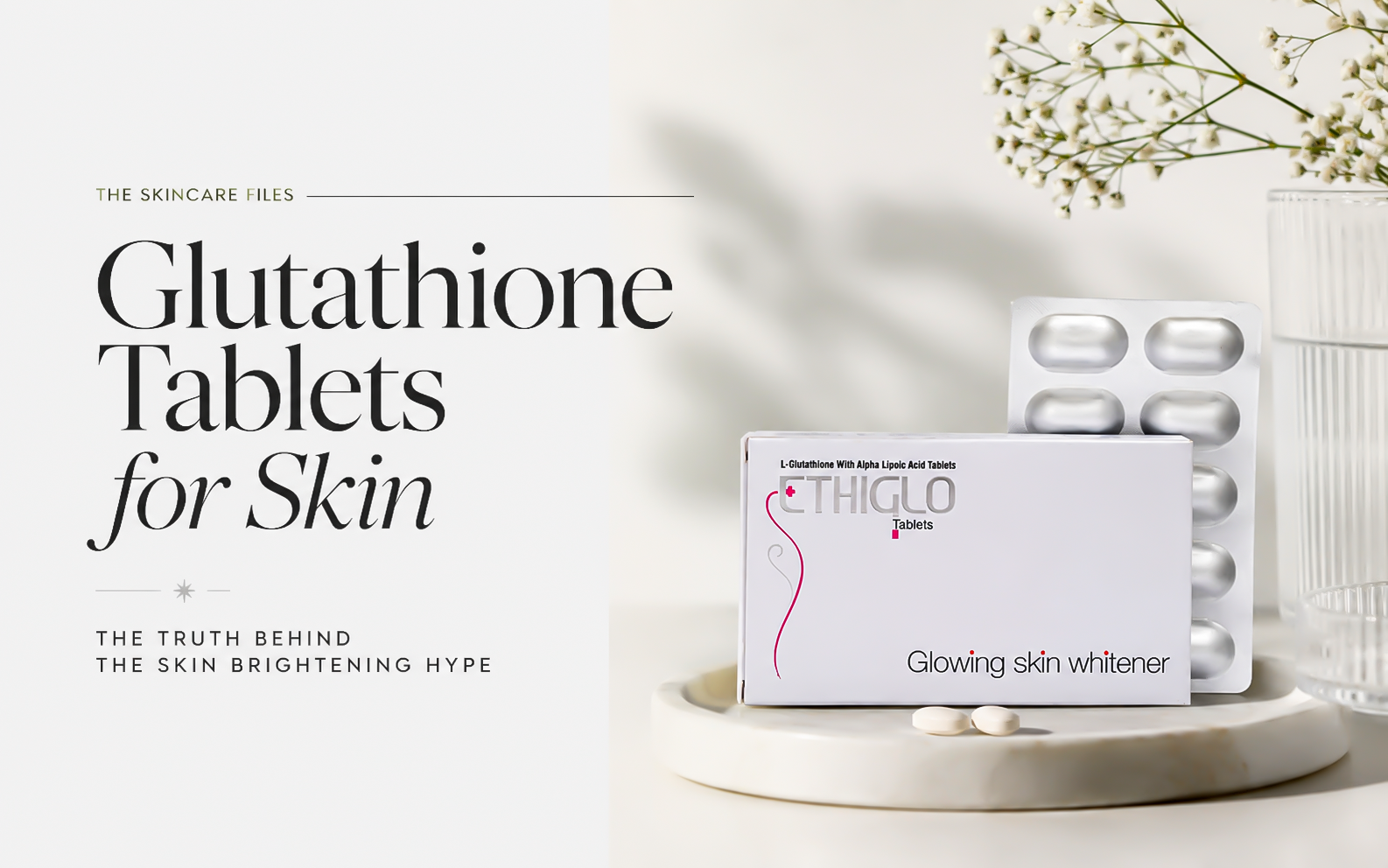
Glutathione has become one of India’s most talked-about ingredients for brighter, more even-looking skin. If you have searched for glutathione tablets for skin, you have probably seen everything from glowing testimonials to claims that these supplements can dramatically change your skin tone. It is understandable to feel curious - and a little skeptical.
Glutathione is a natural antioxidant your body already produces, and it helps protect cells from oxidative stress. Its possible role in pigmentation has made glutathione tablets popular for people dealing with dullness, tanning or uneven skin tone. But the science is more nuanced than the “skin whitening” claims suggest. Let’s look at what glutathione can realistically do - and where the hype gets ahead of the evidence.
What Is Glutathione? Your Body Already Makes It
Glutathione is a powerful antioxidant your body naturally produces, mainly in the liver. It helps protect cells from oxidative stress and supports the body’s natural defence and detoxification processes. When people talk about glutathione tablets for skin, they are referring to supplements intended to increase or support glutathione levels in the body.
Your natural levels can be influenced by factors such as age, oxidative stress, nutrition, and overall health. But this is important: glutathione is not a skin-whitening substance by default. Its role in skin is more nuanced, which is exactly why understanding the science matters before choosing a glutathione supplement for skin.
How Glutathione Affects Skin Tone
If you are wondering why glutathione tablets for skin are linked to brightness and pigmentation, the answer comes down to how melanin is made. Glutathione appears to influence this process in two important ways. It can help reduce the activity of tyrosinase, an enzyme involved in melanin production. It may also influence the type of melanin produced, shifting the balance away from eumelanin, the darker brown-black pigment, towards pheomelanin, a lighter yellow-red pigment.
In simple terms, glutathione may make the skin's pigment-producing process less intense. But that does not mean a glutathione supplement can permanently change your natural skin colour or guarantee skin whitening. Any visible effect, when it occurs, can vary significantly from person to person.
What this means for your skin
Less tyrosinase activity: May reduce the production of melanin, the pigment responsible for skin colour and many forms of pigmentation.
Different melanin balance: Glutathione may encourage relatively more pheomelanin and less eumelanin production.
Potentially more even-looking skin: This is why glutathione tablets for skin whitening are often marketed for brighter or more uniform skin tone.
Not a permanent colour change: Glutathione does not erase your natural skin tone. Results, if any, depend on factors such as baseline pigmentation, sun exposure, genetics, and overall health.
Consistency matters: As studies state. a gluta tablet is not an overnight solution. Any potential skin-related benefit needs to be viewed realistically rather than through dramatic before-and-after claims.
Oral vs Topical Glutathione: Which Format Makes Sense for Your Skin?
Glutathione is available in more than one form, and this is where things can get confusing. Glutathione tablets, liquids, serums and face washes all put the same ingredient on the label, but they do not work in the same way.
If you are choosing a glutathione supplement for skin, the important question is not simply “Which one has more glutathione?” It is “How is my body or skin actually receiving it?” Here is what each format can realistically offer.
Glutathione Tablets for Skin: Do They Actually Absorb?
This is probably the biggest question people have before buying glutathione tablets for skin. Because glutathione is a peptide, some of it can be broken down during digestion before it becomes available to the body. That does not mean oral glutathione does not work - human studies have reported potential effects - but absorption is one reason researchers are still studying the ideal formulation and dose.
A thoughtfully formulated tablet may combine glutathione with nutrients that support antioxidant function.
Glutathione: Provides the antioxidant directly.
Vitamin C: Supports antioxidant activity and helps maintain glutathione in its active form.
Alpha Lipoic Acid (ALA): Supports the body's antioxidant recycling systems.
Form matters: A clearly identified form and quality source of glutathione is more reassuring than simply choosing a tablet because it claims to contain a larger number.
For example, Ethiglo Plus Tab combines Opitac L-Glutathione with Vitamin C and ALA. That makes the formulation more interesting than looking at glutathione content alone.
Glutathione Liquid: An Alternative to Tablets
Not everyone likes swallowing tablets, and that is where a liquid format can feel easier to incorporate into a routine. Ethiglo Liquid is designed for sublingual use, meaning it is held under the tongue rather than immediately swallowed.
The idea is simple: the active is given an opportunity to be absorbed through the tissues under the tongue, instead of relying entirely on the digestive route.
But don't treat liquid glutathione as a shortcut to instant results. Follow the product's directions carefully and give it the recommended contact time under the tongue. The format may be convenient, but consistency still matters.
Glutathione Serum: Best for Targeted Skin Concerns
A glutathione serum works differently from a supplement because it is applied directly to the skin. This can make sense when your concern is mainly uneven tone, dark spots or pigmentation in specific areas.
The smartest topical formulas also pair glutathione with other pigmentation-focused ingredients rather than expecting one ingredient to do everything.
Ethiglo Serum, for example, combines glutathione with Alpha Arbutin, giving the formula another active that works on melanin production.
Think of it this way: a serum is a direct skincare step for the skin, while a supplement works through the body. They can serve different purposes rather than being competing versions of the same product.
Glutathione Face Wash: Helpful, But Not the Main Treatment
A glutathione face wash has one obvious limitation: you wash it off.
That doesn't make it useless. A good cleanser can remove excess oil, dirt and buildup without leaving your skin feeling stripped, while providing some additional brightening support. But because it has limited contact time with the skin, you should not expect it to do the same job as a leave-on serum.
Glutafine Face Wash can therefore work as a supporting step in a pigmentation-focused routine.
The simple rule is:
Tablets: systemic supplementation.
Liquid: an alternative oral delivery format.
Serum: targeted leave-on skincare.
Face wash: cleansing with supportive brightening benefits.
There is no need to pick a format simply because it sounds more advanced. The best glutathione tablets or skincare product for you is the one that fits your concern, your routine, and your skin's tolerance - and comes with realistic expectations.
Safety, Side Effects & Who Should Avoid Glutathione?
Thinking about glutathione tablets for skin but wondering whether they are actually safe? That is a completely fair question.
Oral glutathione has generally been well tolerated in the doses studied in clinical research, but that does not mean every person should take it without thinking about their health, medicines, or individual needs. And when it comes to anything marketed as a glutathione whitening tablet, more is definitely not better.
A few things to keep in mind before taking glutathione tablets
Follow the recommended dose: Take your glutathione supplement for skin exactly as directed by your doctor or the product instructions. Increasing the dose will not guarantee faster results.
Pregnant or breastfeeding? Speak to your doctor before using glutathione supplements. There is not enough evidence to assume that supplementation is appropriate during pregnancy or breastfeeding.
Taking medication or managing a health condition? Check with your doctor before starting a gluta tablet, particularly if you take regular medicines or have an existing medical condition.
Watch how your body responds: If you experience unexpected symptoms after starting a supplement, stop and seek medical advice rather than pushing through.
Be very cautious with IV glutathione: Injectable or IV glutathione marketed for skin whitening is a different matter from oral supplements. Unregulated drips can carry serious risks, and they should not be treated as a harmless shortcut to brighter skin.
Glutathione Tablets: Realistic Expectations & Timelines
If you are taking glutathione tablets for skin, give your skin time. You may notice changes gradually over 8–12+ weeks, but there is no universal timeline. Your baseline pigmentation, sun exposure, diet, health, consistency and skin concerns all matter. And once you see improvement, maintenance matters too - especially daily sunscreen.
Frequently Asked Questions About Glutathione Tablets for Skin
Do glutathione tablets work for skin whitening?
Glutathione tablets may help reduce melanin production and make skin appear brighter or more even-toned in some people, but they should not be treated as guaranteed skin-whitening pills. Research is promising but still limited, with small studies and varying results. If you are considering glutathione tablets for skin whitening, realistic expectations matter more than dramatic before-and-after claims.
Is glutathione good for clear skin?
Glutathione is primarily an antioxidant, so its role goes beyond pigmentation. It helps the body manage oxidative stress, but it is not an acne treatment or a direct “clear skin” supplement. If breakouts, inflammation or post-acne marks are your concern, glutathione may be one supporting part of a broader skincare routine rather than the solution by itself.
What is glutathione good for?
Your body naturally produces glutathione, where it works as an important antioxidant. It helps protect cells from oxidative stress and supports several natural processes in the body. In skincare, it has attracted attention because of its potential effect on melanin production and pigmentation. This is why glutathione tablets for skin are often considered by people looking for a more even-looking complexion.
Is it safe to take glutathione daily?
Oral glutathione has generally been well tolerated in the doses studied in clinical research, but that does not mean daily supplementation is right for everyone. The appropriate dose and duration depend on the individual, and long-term evidence is still limited. If you are taking a glutathione supplement for skin, follow the product directions and speak to your doctor if you are pregnant, breastfeeding, taking medication or managing a health condition.
Can glutathione remove tan?
Glutathione may influence melanin production, so it can potentially help with the appearance of pigmentation associated with tanning. But it cannot simply “erase” a tan, particularly if you continue getting significant sun exposure. If tanning is your concern, glutathione tablets should be viewed as a supporting option, while daily broad-spectrum sunscreen and sun protection remain essential.
Can I take glutathione permanently?
There is not enough long-term evidence to recommend taking glutathione supplements indefinitely for cosmetic skin lightening. If you are considering glutathione whitening tablets for an extended period, it is better to discuss the duration with a healthcare professional rather than assuming that permanent use is necessary. Your reason for taking it, health status and response should all be considered.
What are the bad side effects of glutathione?
Oral glutathione has been generally well tolerated in available clinical studies, but supplements can still cause unwanted effects in some people. If you experience unusual symptoms after starting glutathione tablets, do not simply assume they are part of the “detox” or that the product is working. Stop and seek medical advice if symptoms concern you. Unregulated IV glutathione for cosmetic skin lightening is a much bigger safety concern and should not be treated like an ordinary oral supplement.
Which brand is best for glutathione?
There is no single best glutathione tablet for everyone. Look beyond the brand name and check the form and amount of glutathione, supporting ingredients, manufacturing quality, directions for use and whether the product is transparent about what it contains.
For example, Ethiglo Tab is an oral glutathione option, while Ethiglo Plus Tab combines Opitac L-Glutathione with Vitamin C and Alpha Lipoic Acid. Which is more appropriate depends on what you are looking for and your individual needs. When in doubt, discuss supplementation with your doctor.
Which is better, kojic acid or glutathione?
They are not really competing ingredients because they work in different ways and are used in different formats. Kojic acid is a topical pigmentation-focused ingredient, while glutathione is an antioxidant naturally produced by the body and is also available as an oral supplement.
If your concern is a specific dark spot or uneven pigmentation, a topical product containing kojic acid may make more practical sense. If you are considering a glutathione supplement for skin, it should be approached as a different type of intervention rather than a direct replacement for topical skincare.
Can glutathione increase collagen?
Glutathione is better known for its antioxidant role than for directly stimulating collagen production. While reducing oxidative stress may support overall skin health, glutathione should not be marketed as a collagen-building supplement in the same way as ingredients specifically studied for collagen synthesis. If your primary concern is firmness, fine lines, or collagen loss, a skincare routine designed around those concerns may be more appropriate.
What is the strongest skin-lightening agent?
There is no single “strongest” skin-lightening ingredient that is automatically the best choice. Hydroquinone is a potent depigmenting agent used in dermatology, but it is not something to treat casually or indefinitely without professional guidance. Other ingredients, including kojic acid, azelaic acid, retinoids, and arbutin, may be appropriate depending on the type of pigmentation.
The goal should not be to use the strongest possible ingredient. It should be to use the right treatment for the actual cause of pigmentation without damaging the skin barrier.
What is the best brand of glutathione for skin whitening?
If you are specifically searching for the best glutathione tablets for skin whitening, it is worth being cautious about any brand promising dramatic or permanent whitening. No oral glutathione product can guarantee that outcome.
For a supplement option, Ethiglo Tab provides glutathione in tablet form, while Ethiglo Plus Tab combines Opitac L-Glutathione with Vitamin C and Alpha Lipoic Acid. If you prefer a topical approach, Ethiglo Serum combines glutathione with Alpha Arbutin for targeted skincare.
Ultimately, the best choice is the one that fits your skin concern, health needs, and expectations; not simply the one making the biggest whitening promise.