How to Reapply Sunscreen Over Makeup Without Ruining Your Base
Learn how to reapply sunscreen over makeup without smudging your base. Compare sunscreen sticks and gels for easy, effective sun protection.
By EMM Editors · 2026-10-15
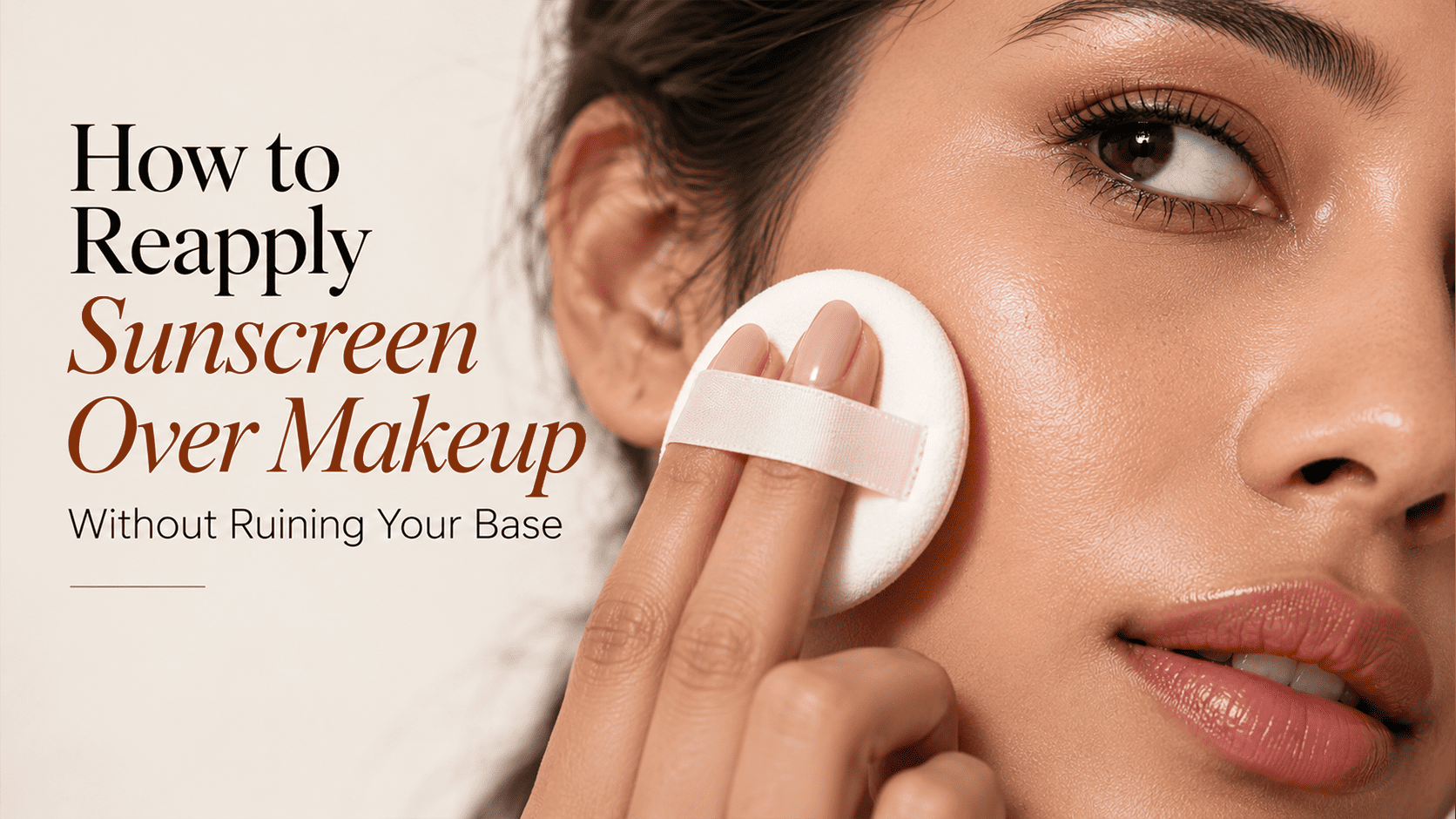
Your makeup took 20 minutes to perfect. Reapplying sunscreen shouldn't undo all that work. But UV protection needs topping up, even when your foundation is still flawless. The trick is knowing how to reapply sunscreen over makeup without disturbing what's underneath. From sunscreen sticks to careful application techniques, here's how to refresh your protection without starting your makeup routine again.
How Can You Reapply Sunscreen Over Makeup Without Removing It?
To keep foundation from turning patchy, take excess oil away before adding anything back. Blot gently with oil-absorbing paper, then choose a broad-spectrum sunscreen that sits comfortably over your base. With clean hands, apply it in small sections, pressing rather than rubbing. A clean, soft makeup sponge may help reduce streaks, although it can absorb some product. Pay attention to your forehead, cheeks, nose, and jawline, as well as your exposed ears, rather than just the shiny spots.
A sunscreen stick over makeup offers a convenient touch-up, but several careful passes are usually needed for even coverage; one quick swipe is not enough.
The catch? Knowing how to reapply sunscreen over makeup without smudging it is different from achieving the SPF on the label. Effective sunscreen reapplication requires a generous, uniform layer, which may move foundation. For prolonged outdoor exposure, give UV protection priority and touch up your makeup afterwards.
Is a Sunscreen Stick Easier to Use Over Makeup?
A sunscreen stick can make midday touch-ups less messy, especially when you’re travelling or heading out after work. Unlike creams, the solid formula comes in a twist-up applicator, so you can apply sunscreen without squeezing product onto your fingers.
For convenient sunscreen reapplication, Z Stick Sunscreen Stick, available at EmegaMart, offers broad-spectrum SPF 50+ protection in a portable format. However, its performance specifically over makeup has not been established.
The convenience comes with a trade-off. One quick swipe may leave uneven coverage, while repeated passes can disturb foundation or blush. Pay particular attention to curved areas around the nose and jawline, where gaps are easy to miss.
The practical benefit? A sunscreen stick over makeup is easy to carry and use throughout the day. But convenience does not guarantee adequate protection. For extended outdoor exposure, applying a sufficient, even layer matters more than keeping your makeup untouched.
Can You Reapply Sunscreen Gel Over Foundation?
Gel sunscreens can feel lighter over makeup, but the right formula makes a difference. Some settle smoothly, while others may cause foundation to separate, streak or pill during reapplication.
Two options worth comparing are:
AC Sheer Sunscreen Gel: With SPF 50 PA+++, a transparent texture and a velvety, non-greasy finish, it is particularly suited to creating a smooth base before makeup. Its invisible formulation also avoids a white cast.
AC Screen Sunscreen Gel: Offering SPF 50 protection, an oil-regulating formula and tea tree oil, it is more specifically targeted towards oily, acne-prone skin where excess shine is a concern.
Both offer advantages for initial application, but neither is guaranteed to preserve foundation during midday sunscreen reapplication.
When applying sunscreen over makeup, blot excess oil first, then gently press the gel onto your skin rather than rubbing. However, achieving adequate, even UV coverage may still disturb your foundation, making a small makeup touch-up necessary.
Sunscreen Stick vs Gel: Which Is More Practical Over Makeup?
The easier a sunscreen is to carry, the more likely you are to reach for it. But convenience alone doesn't guarantee even UV protection, especially when foundation is already on your face.
Here's how the two formats compare for sunscreen reapplication:
Sunscreen Sticks: Better Portability and Targeted Application
Z Stick Sunscreen Stick is compact, mess-free, and easy to carry during commutes or outdoor activities. Its solid format lets you target areas without dispensing product onto your fingers.
However, applying enough sunscreen across your entire face requires multiple passes. Repeated swiping may shift foundation, and it's easy to miss areas around the nose and hairline.
Sunscreen Gels: Better Control Over Product Quantity
AC Sheer Sunscreen Gel and AC Screen Sunscreen Gel allow you to dispense and distribute product across a larger area. This can make it easier to judge how much you're applying, although blending over foundation may cause streaking, pilling or makeup movement.
Which should you choose?
For convenience: A sunscreen stick is easier to carry and use on the go.
For more controlled full-face application: A gel allows you to dispense a generous amount, provided you're prepared to touch up your makeup afterwards.
Neither format guarantees the labelled SPF when applied sparingly over makeup. The better choice is the one you can apply generously and evenly, rather than simply the one that leaves your foundation looking untouched.
How Do You Reapply Sunscreen With Different Types of Makeup?
Your makeup coverage determines how easily you can refresh your sun protection. Understanding how to reapply sunscreen over makeup starts with choosing a technique that suits your base, whether it's a barely-there tint, full-coverage foundation or a powdered finish.
Light Makeup or Tinted Moisturiser
Light makeup is more forgiving during sunscreen reapplication. Since there's less pigment on your skin, gentle blending is less likely to leave obvious patches.
Blot first: Remove excess oil or sweat without wiping away your makeup.
Apply in sections: Gently press sunscreen across your forehead, cheeks, nose, and chin, distributing enough for even coverage.
Touch up afterwards: Allow the sunscreen to settle before restoring any displaced tint, blush, or concealer.
A lighter base is easier to repair, giving you more flexibility to apply adequate sunscreen rather than compromising protection to preserve your makeup.
Full-Coverage Foundation
Full-coverage makeup is harder to maintain because foundation, concealer, and setting products can move when another layer is applied.
Applying a sunscreen stick over makeup may offer better control around specific areas, but repeated swipes can drag foundation or disturb concealer. Gels allow broader application, although rubbing them in may cause streaking or pilling.
To minimise disruption, gently press the sunscreen onto your skin in small sections. Avoid aggressive blending, but don't sacrifice even coverage for a flawless finish.
If you're spending considerable time outdoors, prioritise a sufficient sunscreen layer and repair your foundation afterwards.
Oily Skin and Powdered Makeup
By midday, sebum can mix with foundation and setting powder, making additional sunscreen feel heavier or appear patchy.
Knowing how to reapply sunscreen on your face when it's oily means dealing with that buildup first.
Absorb excess shine: Use blotting paper instead of adding another layer of powder.
Reduce buildup: Gently remove heavy or uneven powder deposits where necessary.
Reapply evenly: Press sunscreen over makeup carefully, allowing it to settle before making minor makeup corrections.
Less oil and product buildup can mean a smoother finish with fewer visible patches.
Remember, ordinary setting powder cannot replace sunscreen. Effective sunscreen reapplication still depends on applying enough product for consistent UV coverage, even when that requires touching up your makeup afterwards.
Are You Applying Enough Sunscreen When You Touch Up?
Your sunscreen can look freshly applied and still leave gaps in protection. SPF ratings are measured using a generous, uniform layer; a single swipe of a sunscreen stick over makeup or a pea-sized dot of gel may fall short.
For sunscreen reapplication, cover your exposed face, including the nose, hairline and jawline, using enough product to form an even layer. Sticks need multiple passes, while gels need careful spreading. Neither format delivers its labelled protection when applied too thinly.
Prioritising even coverage over an untouched base helps you protect skin without mistaking a quick touch-up for full protection.
A Flawless Finish Is Nice. Proper Protection Is Better.
The best sunscreen touch-up isn't necessarily the one that leaves your makeup untouched. It's the one that gives your skin the protection it needs while keeping the damage to your base manageable.
A stick might make reapplication easier on busy days, while a gel offers more control over how much product you apply. Neither is a shortcut to proper coverage.
After all, foundation can be blended back into place, but missed UV protection cannot be corrected with a makeup brush.
Ready to find what works for your routine? Explore sunscreen options at EmegaMart and choose a formula you'll feel comfortable applying generously, not just wearing beautifully.
Frequently Asked Questions
1. Do you have to wait 15 minutes after reapplying sunscreen?
Sunscreen is generally recommended at least 15 minutes before sun exposure, following the product's directions. If you're already outdoors, don't delay necessary sunscreen reapplication. Apply a generous, even layer and allow it to settle before touching up your makeup. Waiting does not compensate for applying too little sunscreen.
2. How soon can I apply makeup after sunscreen?
Allow your sunscreen to settle before applying foundation or concealer. A few minutes may help reduce product mixing, streaking and pilling, although there is no universal waiting time. Apply sunscreen generously first, then gently layer your makeup without rubbing away the protective film.
3. How to apply sunscreen if you wear makeup?
Apply sunscreen after your morning skincare and before foundation. For midday touch-ups, knowing how to reapply sunscreen over makeup can help minimise disruption. Blot excess oil, apply sunscreen gently in sections and avoid aggressive rubbing. Use enough product for even coverage, then repair any disturbed makeup afterwards.
4. What is the best sunscreen to reapply over makeup?
The best option depends on your makeup coverage and application preferences. Z Stick Sunscreen Stick offers portability and convenient application, while AC Sheer and AC Screen Sunscreen Gels allow you to dispense and spread product across larger areas. However, none is guaranteed to preserve makeup during reapplication. Prioritise adequate, even coverage over the convenience of the format.
5. Is it possible to reapply sunscreen over makeup?
Yes, you can apply sunscreen over makeup without removing your entire base. Blotting excess oil and gently pressing sunscreen onto your skin may reduce smudging. However, applying enough sunscreen to maintain effective UV protection can still shift foundation or concealer. Be prepared for minor makeup corrections afterwards.
6. Do I need to wash my face when reapplying sunscreen?
Not necessarily. If your skin is reasonably clean, you can blot excess oil and reapply sunscreen directly. However, heavy sweat, dirt or significant product buildup may make cleansing and starting again more practical. When learning how to reapply sunscreen on your face, focus on creating an even layer rather than simply adding product over accumulated makeup.
7. What is the best time to apply sunscreen on face?
Apply sunscreen every morning before makeup and approximately 15 minutes before going outdoors, following the product instructions. Reapply about every two hours while outdoors, and after swimming or heavy sweating. If you wear foundation, a sunscreen stick over makeup may be convenient, but sufficient product and complete coverage remain essential.