Sunscreen for Babies and Kids in India: What Parents Should Check Before Buying
Choosing sunscreen for babies? Learn age guidelines, SPF 30+ protection, mineral sunscreen ingredients and what parents should check before buying.
By EMM Editors
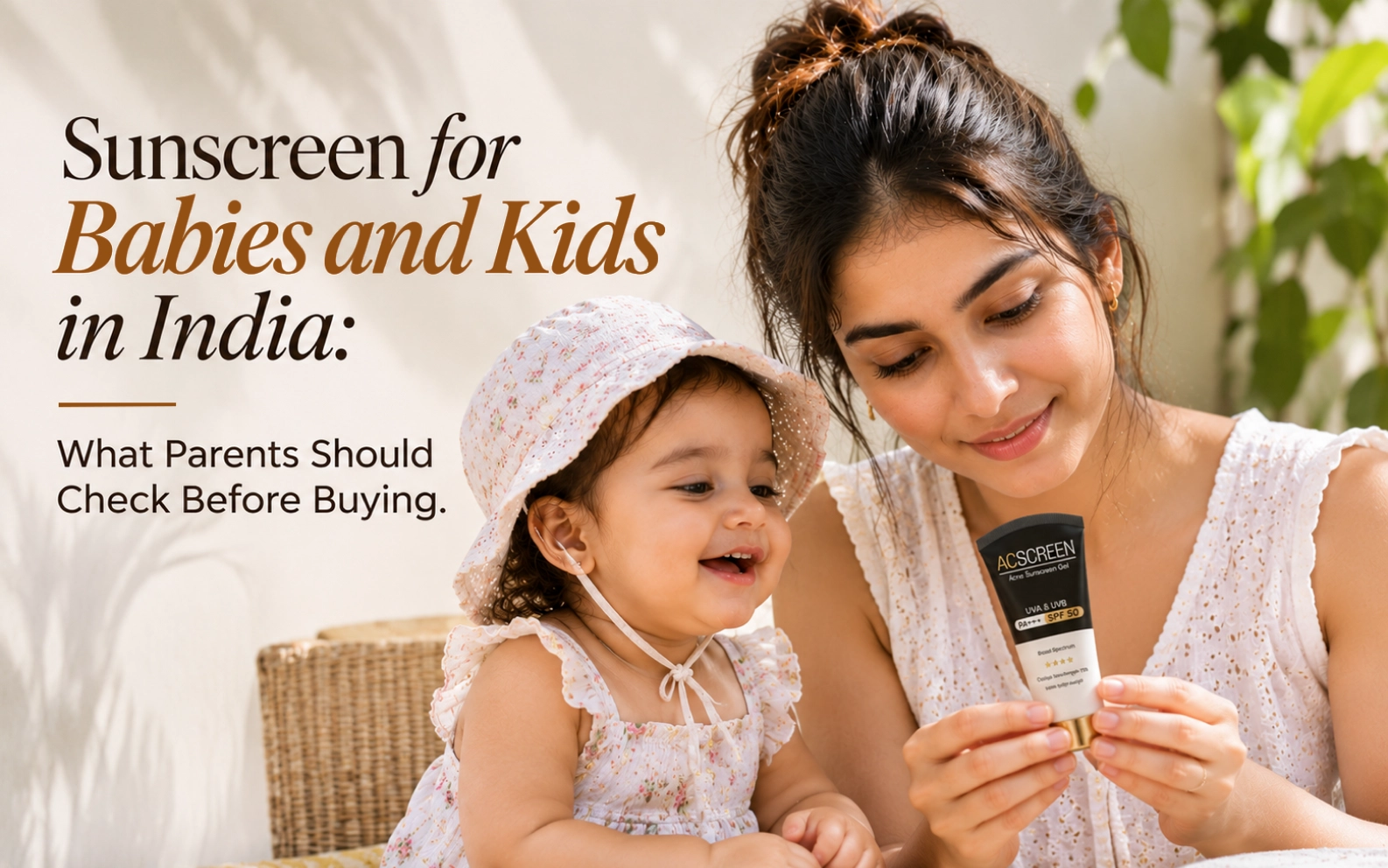
The school bag is packed, the water bottle is filled, and your child is already halfway to the playground. But did you remember their sunscreen?
In India’s strong sunshine, that tiny tube deserves a closer look - not just for its SPF, but for the age on the label and what’s actually inside.
Choosing sunscreen for babies isn’t the same as borrowing yours. For infants under six months, shade and protective clothing come first; older babies and kids need thoughtfully chosen protection. Here’s what matters before you add one to your basket.
Does Your Baby Actually Need Sunscreen?
Yes, but your baby's age makes all the difference. For infants under six months, shade and protective clothing come first. Once they're six months or older, sunscreen becomes an important part of outdoor protection.
And remember, even the best sunscreen can't replace a shady spot, comfortable clothing, or avoiding prolonged exposure to strong midday sunlight.
Sunscreen for Babies Under 6 Months
Picture a morning stroller walk that stretches into lunchtime. The sun gets stronger, your baby's tiny feet are peeking out, and you're wondering whether to reach for sunscreen.
For babies younger than six months, routine sunscreen use is generally discouraged because their skin is especially sensitive.
Instead, choose shaded routes, use a stroller canopy with good airflow, and dress your baby in lightweight, protective clothing and a brimmed hat.
Travelling somewhere sunny? Plan frequent breaks in cool, shaded spaces. If adequate shade and clothing aren't possible, ask your paediatrician about applying a small amount of sunscreen to exposed skin.
Sunscreen for Babies Above 6 Months and Young Children
Once your baby reaches six months, an age-appropriate baby sunscreen can join the outdoor essentials. Look for broad-spectrum SPF 30 or higher, preferably water-resistant, and apply it generously to uncovered skin.
For toddlers who seem determined to outrun you at the park, a comfortable, easy-to-apply sunscreen for kids makes regular application more manageable. School-going children may need protection during sports, swimming, and outdoor activities. The principle stays the same; choose suitable protection, apply it properly, and don't rely on sunscreen alone.
How Do You Know Whether a Baby Sunscreen Is Actually Suitable?
That cute teddy bear on the tube? Adorable. But before it lands in your shopping basket, turn the pack around. The small print tells you much more than the packaging ever will.
Here's your 30-second label check:
Age suitability: Is it appropriate for your child's age?
Sun protection: Look for broad-spectrum UVA/UVB coverage and SPF 30 or higher.
UV filters: Zinc Oxide or Titanium Dioxide are often well tolerated by sensitive skin.
Formula: Check for fragrance, particularly if your child has sensitive skin.
Water resistance: Important for swimming and sweaty playground adventures.
Directions: Check application, reapplication and age-related warnings.
Remember, “baby-safe,” “natural,” “chemical-free,” and “dermatologist-tested” sound reassuring, but none replaces clear, verifiable protection information.
Is Mineral Sunscreen Better for Babies and Sensitive Skin?
Ever tried putting sunscreen on a wriggling toddler? Between the squirming and the protests, you want protection without turning application into a daily battle.
Mineral sunscreen for babies contains Zinc Oxide, Titanium Dioxide, or both. Dermatologists often recommend these filters for sensitive skin because they're generally less likely to sting.
But mineral doesn't automatically mean irritation-free. Fragrance, other ingredients, and your child's skin tolerance still matter. For children six months and older, prioritise broad-spectrum SPF 30 or higher over reassuring but vague “chemical-free” claims.
What Does Zinc Oxide Do in Baby Sunscreen?
Think of Zinc Oxide as a UV filter offering protection against both UVA and UVB rays. Shopping for zinc oxide sunscreen for kids? Don't be dazzled by a large percentage printed on the packaging.
The Zinc Oxide concentration alone doesn't establish the finished sunscreen's tested SPF or UVA protection. Check its labelled SPF and broad-spectrum protection instead.
Does Mineral Sunscreen Always Leave a White Cast?
Not necessarily. Some mineral formulas leave a noticeable pale film, especially on deeper skin tones. Others blend more comfortably, depending on their formulation and texture. And this matters more than you might think.
If a sunscreen feels chalky or takes forever to spread, you may be tempted to apply less. The better choice? An age-appropriate formula that's comfortable enough to apply generously and reapply as directed, without a struggle.
SPF 30 vs SPF 50: Does Your Baby Need the Higher Number?
You're standing in the sunscreen aisle, holding an SPF 30 in one hand and SPF 50 in the other. Naturally, the bigger number feels like the safer choice. But does it really make that much difference?
SPF measures protection against UVB rays, which primarily cause sunburn. Under laboratory conditions:
SPF 25: Filters approximately 96% of UVB rays.
SPF 30: Filters approximately 97%.
SPF 50: Filters approximately 98%.
So, SPF 50 isn't twice as protective as SPF 25, and the difference between SPF 30 and 50 is relatively small.
When choosing sunscreen for babies aged six months and older, look beyond the number. Prioritise broad-spectrum UVA/UVB protection, SPF 30 or higher, adequate application, and water resistance for swimming or sweaty play.
And remember, higher SPF doesn't mean longer-lasting protection. Reapply approximately every two hours outdoors and after swimming or sweating, as directed.
The best sunscreen? One you'll apply properly, every time.
Which Sunscreen Should You Choose for Your Child's Daily Activities?
A quick walk to the park, a Sunday at the beach, and an afternoon of cricket aren't quite the same thing. So why choose sunscreen as though they are?
The right sunscreen for kids depends on their age, how they'll spend time outdoors, and how comfortably the formula goes onto their skin.
Your child's routine | What to look for | What matters most |
Baby under 6 months | Shade and protective clothing first | Avoid direct sun; seek paediatric advice if protection is inadequate |
Baby 6+ months or toddler | Broad-spectrum SPF 30+, age-appropriate formula | Gentle application to uncovered skin |
Swimming or outdoor sports | SPF 30+, water-resistant protection | Check the water-resistance duration and reapply |
Sensitive or eczema-prone skin | Fragrance-free formula; consider mineral filters | Ingredient tolerance and comfortable application |
For Everyday Walks and Playground Visits
That 20-minute park visit can easily become an hour once your toddler discovers the swings! For children six months and older, apply broad-spectrum sunscreen to uncovered areas, including ears, hands, and feet. A wide-brimmed hat, breathable protective clothing, and shaded playtime reduce unnecessary exposure.
For Swimming, Beach Trips and Outdoor Sports
Here's where water resistance earns its place on the label. Look for a sunscreen tested for 40 or 80 minutes of water resistance, depending on the activity. Neither means waterproof. Reapply according to the label, approximately every two hours outdoors, and after swimming, heavy sweating, or towel drying.
For Children With Sensitive or Eczema-Prone Skin
If your child complains that sunscreen stings, don't assume they simply dislike having it applied.
Fragrance and certain ingredients may aggravate sensitive skin. A fragrance-free mineral sunscreen for babies aged six months and older, containing Zinc Oxide or Titanium Dioxide, may be better tolerated.
Try a small amount on an unaffected area first. If your child has active eczema, broken skin, or repeated reactions, ask their dermatologist for guidance. The goal isn't one perfect sunscreen for every occasion. It's dependable protection your child can comfortably wear.
What Should You Check Before Buying a Baby Sunscreen in India?
That adorable “baby” label? Don't let it make the decision for you. When shopping for sunscreen for babies, check these essentials:
Age: Does the label clearly specify suitability?
Protection: SPF 30+ and broad-spectrum UVA/UVB coverage.
Ingredients: UV filters, fragrance and potential irritants.
Practicality: Water-resistance claims and application instructions.
Value: Pack quantity, price and how frequently you'll need it.
Consider Z Block Baby 100% Mineral Sunscreen. Its listing mentions SPF 30 and ZinClear IM® technology.
But “baby” doesn't automatically mean newborn-safe. For infants under six months, prioritise shade and clothing, and consult your paediatrician when necessary.
How Much Sunscreen Should You Apply, and When Should You Reapply It?
Ever finished applying sunscreen, only to spot your toddler's completely bare ears five minutes later?
For children aged six months and older, apply sunscreen for kids generously and evenly across exposed skin. Don't forget the ears, back of the neck, arms, hands, and those little feet peeking out of sandals.
There's no one-size-fits-all quantity; coverage depends on your child's size. And one application isn't an all-day pass. Reapply approximately every two hours outdoors, and after swimming, sweating, or towel drying, following the product's instructions.
What If Your Baby Cries, Rubs Their Eyes or Develops a Rash After Sunscreen?
You finally manage to apply sunscreen, and seconds later, your little one is rubbing their eyes and crying. Sound familiar?
Sometimes, sunscreen stings when it gets too close to the eyes. Apply facial sunscreen carefully with your fingertips, avoiding the eyelids and immediate eye area. If it gets into the eyes, rinse gently with clean water.
But what if your baby's skin turns red, itchy, or develops a rash?
Don't dismiss irritation as a sign that the sunscreen is working.
Stop using the product and gently wash it off.
Avoid experimenting with several new products while the skin is irritated.
Contact your paediatrician if redness persists, swelling develops, or reactions keep recurring. Seek urgent care for breathing difficulties or facial swelling.
A comfortable formula matters just as much as good UV protection.
Before choosing another baby sunscreen, explore Z Block Baby 100% Mineral Sunscreen on eMegaMart to review its ingredients, age guidance, and application instructions. Because protecting delicate skin should never mean ignoring its reaction.