How to Remove Tan from Hands: Why Your Face Gets Brighter, but Your Hands Stay Dark
Learn how to remove tan from hands with daily sunscreen, moisturising and pigmentation care. Discover causes of dark hands and tips for gradual improvement.
By EMM Editors
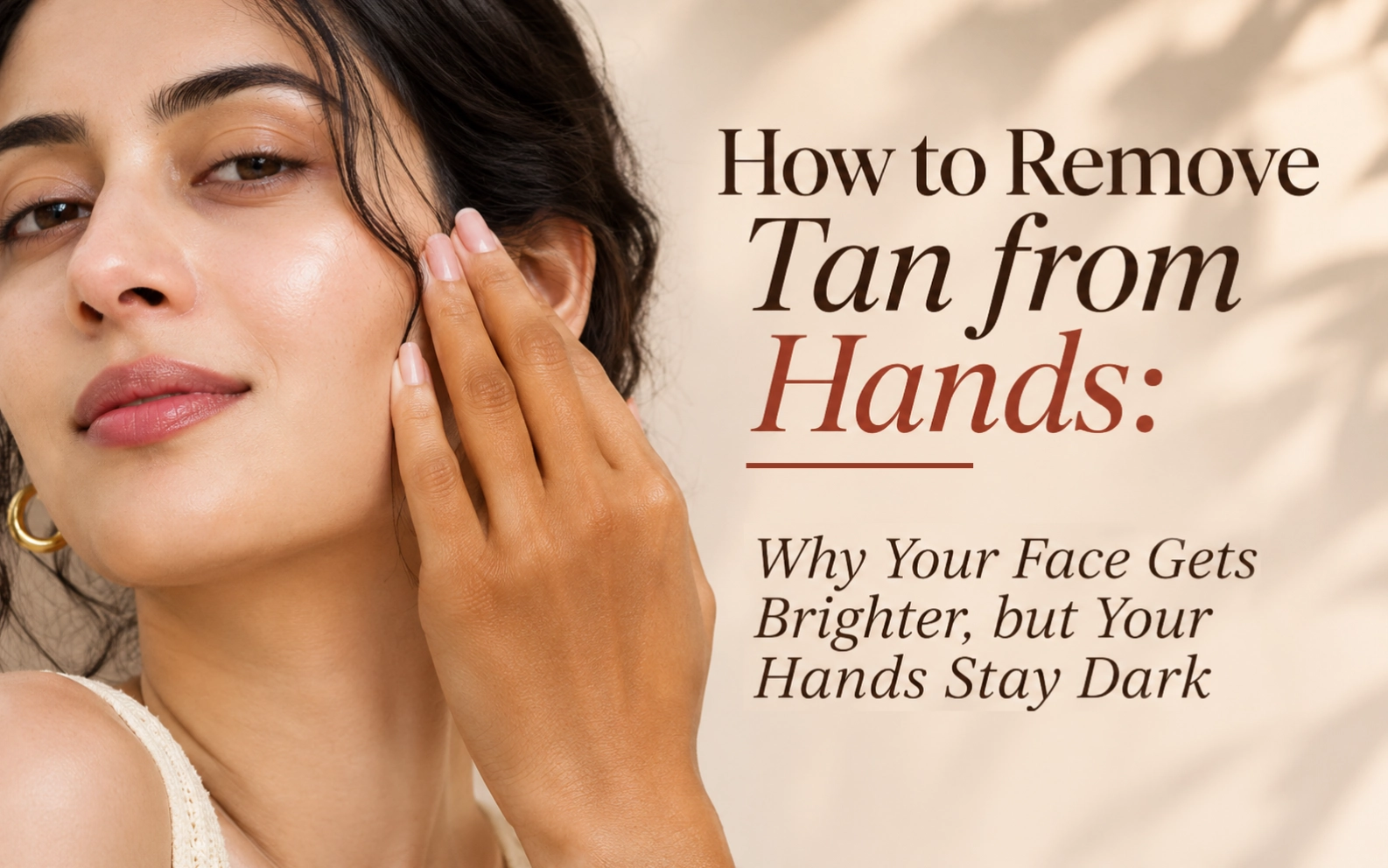
Your face gets the full treatment: cleanser, serum, moisturiser, SPF. Your hands? A hurried rinse after lunch and barely a thought about sun protection. Then one day, you take off your watch and notice that unmistakable lighter strip underneath.
No wonder you're wondering how to remove tan from hands. But is it really stubborn sun tan, or could daily exposure, forgotten sunscreen, or another form of pigmentation explain the difference? The answer might change how you care for your hands.
Why Are Your Hands Darker Than Your Face?
Ever noticed how your hands seem to hold on to a tan long after your face starts looking brighter? The difference often comes down to two everyday habits you probably haven't thought much about.
Are Your Hands Getting More Sun Exposure Than You Think?
Think about your daily commute. Whether you're riding a two-wheeler, driving, or running errands, your hands are constantly catching sunlight.
Repeated UV exposure triggers melanin production, gradually darkening exposed skin. Even car windows aren't complete protection; UVA can pass through many side windows. Those lighter patches beneath your watch or sleeves? They're little reminders of how uneven that exposure can be.
Why Does Your Facial Skincare Routine Seem to Work Better?
Your face gets sunscreen before you leave home. Your hands get washed after breakfast, lunch, and countless little tasks, taking sunscreen off with them.
That's why how to remove tan from hands starts with preventing further darkening. A portable SPF 50+ option like Z Stick Sunscreen makes reapplication convenient. Just remember to cover your fingers, wrists, and hands thoroughly.
Is It Really Sun Tan, or Could Something Else Be Darkening Your Hands?
Before reaching for another de-tan cream, take a closer look. Where the darkness appears can tell you more than you might think.
How Can You Tell Whether It's Ordinary Tanning?
Sun tanning typically follows exposure. The backs of your hands and uncovered forearms may look darker than the skin beneath your watch or sleeves.
Those visible tan lines are useful clues, although they don't confirm the cause. With consistent sun protection, ordinary tanning may gradually fade.
Why Do Your Knuckles Sometimes Look Darker?
Here's where things get interesting. Dark knuckles aren't always about sunlight. Friction, previous irritation, or underlying skin conditions may contribute.
If the skin appears unusually thick, velvety, or increasingly dark, consult a dermatologist rather than experimenting with stronger brightening creams.
This guide to dark spots, pigmentation, and melasma explains why different types of pigmentation need different approaches.
Could Your Sunscreen Habits Be Keeping Your Hand Tan from Fading?
You might be doing everything right with your nighttime skincare, only to undo some of that effort during your morning commute. And your hands are often the last place you remember to protect.
Can Sunscreen Remove an Existing Tan?
No, sunscreen won't erase an existing tan. What it can do is protect your skin from further UV-induced darkening, giving the existing pigmentation a better chance to fade gradually.
So, if you're wondering how to remove tan from hands, sun protection deserves more attention than another brightening cream.
Choose broad-spectrum SPF 30 or higher. Z Block Sunscreen Gel, for instance, offers SPF 50 protection with 25% Zinc Oxide.
But application matters. Cover your fingers, wrists, and the backs of your hands. Reapply after handwashing when heading outdoors, and approximately every two hours during prolonged exposure.
For daily commutes, protective sleeves can help too. The idea? Stop adding to the tan you're trying to fade.
When Should You Reapply Sunscreen to Your Hands?
Think about how often you wash your hands throughout the day. Every wash can remove some of your sunscreen, leaving your skin exposed again.
The simple rule? Reapply after handwashing when heading outdoors, and roughly every two hours during prolonged sun exposure. Don't forget your fingers, wrists, and exposed forearms.
Z Block can be an option for your morning application, while Z Stick Sunscreen offers a convenient format for touch-ups. Just make sure you're applying enough for proper coverage.
And if you spend hours commuting, UV-protective arm sleeves offer another useful layer of protection. You don't need more sunscreen products. You need better sunscreen habits.
How to Remove Tan from Hands with a Morning and Night Routine
Your hands don't need a ten-step skincare routine. They need the same attention your face gets, adapted to a day of commuting, handwashing, and everything in between.
What Should Your Morning Hand-Care Routine Look Like?
Start with gentle cleansing, not aggressive scrubbing. If your hands feel dry, follow with a comfortable moisturiser. Then comes the non-negotiable: broad-spectrum SPF 30 or higher across your hands, fingers, wrists, and exposed forearms. Washed your hands before heading outdoors? Reapply sunscreen. That morning application won't necessarily last through repeated washing.
What Should You Apply to Tanned Hands at Night?
Nighttime is where you can consider addressing existing uneven pigmentation.
Unlike ordinary moisturisers, pigmentation-focused lotions may contain ingredients such as Kojic Acid derivatives, Arbutin, Niacinamide, and Vitamin C. For instance, Kozilite Lotion combines Kojic Acid Dipalmitate, Vitamin C, Nicotinamide, Arbutin, Bearberry, and Mulberry extracts.
It's an option worth exploring, not a promise of overnight tan removal. Results depend on what's causing the pigmentation, the formulation, and consistent sun protection.
Do You Need a Brightening Lotion or Just Better Moisturising?
Not every pair of dark-looking hands needs a pigmentation treatment. Sometimes, it's actual tanning. Other times, dryness makes your skin look duller than it really is. Knowing the difference could save you from buying products you don't need.
When Does a Pigmentation-Focused Body Lotion Make Sense?
If you're protecting your hands from the sun but uneven pigmentation persists, a leave-on treatment may be worth considering.
Kozilite Lotion, with ingredients such as Kojic Acid Dipalmitate and Arbutin, offers a pigmentation-focused approach that ordinary moisturisers don't. But more brightening ingredients don't guarantee faster results. Follow application directions, watch for irritation, and keep expectations realistic.
What If Your Hands Are Both Dry and Uneven in Tone?
Here's an interesting possibility: dryness can make skin look dull without actually increasing pigmentation.
Ethiglo Body Lotion brings together Ceramide 3B, Ethyl Ascorbic Acid, Kojic Acid Dipalmitate, and Rice Water, combining moisturising and pigmentation-focused ingredients. However, visible tan reduction isn't guaranteed.
What If Your Main Concern Is Dry, Rough Hands?
If your hands feel tight after washing, prioritise moisture. Hydrofil Moisturizing Cream contains Glycerin to attract water and Paraffin to reduce moisture loss.
It won't directly remove a tan, but it can help with uncomfortable, dry skin. You don't need all three. You need the one that addresses your actual concern.
Can Lemon, Besan or DIY De-Tan Scrubs Really Remove Hand Tan?
That trusty besan-and-curd pack, a pinch of turmeric, or tomato pulp rubbed onto your hands - home remedies have been passed around for generations. But do they actually remove tanning?
Are Home Remedies Making Your Skin Brighter or Just More Irritated?
Besan and curd may leave skin feeling cleaner or softer, but there's little evidence that these DIY mixtures meaningfully reduce sun-induced melanin.
And lemon juice? That's where things get risky. Sunlight after applying citrus juice can cause burns and stubborn dark patches. Baking soda and vigorous scrubbing may also irritate skin, potentially worsening pigmentation. The takeaway? Softer-looking skin isn't necessarily less tanned skin.
How Long Does It Take for a Tan on Your Hands to Fade?
That stubborn watch-strap tan line didn't appear overnight, so don't expect it to disappear by Friday!
Can You Remove Hand Tan in Seven Days?
Not reliably. Mild tanning may fade over several weeks with consistent sun protection. Stubborn pigmentation can take longer and sometimes needs dermatological attention. For a closer look at treatment approaches for persistent darkening, this hyperpigmentation treatment guide explains how different causes may require different care. And remember, softer skin after moisturising doesn't necessarily mean the pigmentation has faded.
How Can You Track Genuine Progress?
Take photos every couple of weeks, using the same lighting and angle. Keep applying sunscreen regularly, and resist increasing exfoliation just because results seem slow. Patience beats aggressive treatments.
Can You Use the Same Routine to Remove Tan from Hands and Legs?
Those sandal-strap lines on your feet and darker forearms tell a familiar story: sunlight doesn't stop at your wrists.
If you're wondering how to remove tan from hands and legs, start with the same basics: sunscreen on exposed skin and moisturiser wherever dryness appears.
Larger areas are often easier to cover with body lotions than facial serums. Considering a pigmentation-focused lotion? Check that its label permits use on both areas and that your skin tolerates it.
When Should Dark Hands or Knuckles Be Checked by a Dermatologist?
Still blaming the sun for dark knuckles? Sometimes, tanning isn't the explanation.
If the colour changes suddenly, spreads, or the skin becomes unusually thick or velvety, book a dermatologist appointment. The same goes for darkening that persists despite consistent sun protection. You may need a different diagnosis, not a stronger brightening cream.
Conclusion: Your Hands Deserve More Than Leftover Face Skincare
Your face gets the serums, sunscreen, and daily attention. Your hands? They face sunlight, constant washing, and whatever SPF survives until lunchtime.
If you're wondering how to remove tan from hands, start with consistent sun protection, regular moisturising, and targeted pigmentation care only when needed. Remember, not every dark patch is tanning, and no single cream can fix every cause.
Ready to give your hands some attention? Explore eMegaMart's Body Care collection for skincare options that suit your concerns. Your hands deserve a routine, too.
Frequently Asked Questions About Removing Tan from Hands
1. What is the best way to remove sun tan from hands at home?
The best approach is to prevent further tanning while giving existing pigmentation time to fade. Use a gentle cleanser, moisturise regularly, and apply broad-spectrum SPF 30 or higher to exposed hands every day.
If uneven colour persists, a suitable leave-on pigmentation treatment may help. The trick isn't finding the strongest de-tan product; it's building a routine your skin can tolerate consistently.
2. How can I remove tan from hands in one day or seven days?
You cannot reliably remove a genuine sun tan in one day or guarantee complete removal within seven days. Tanning involves increased melanin production, which doesn't disappear after a single face pack or scrub.
Your hands may look fresher after moisturising, but that's different from reducing pigmentation. Expect gradual improvement over weeks, depending on the depth of tanning and ongoing sun exposure.
3. Does sun tan on hands go away naturally?
Yes, ordinary sun tanning can gradually fade when additional UV exposure is controlled. Mild tanning may improve over several weeks, while deeper or repeated pigmentation can take months.
If you're wondering how to get rid of hand tan, start by protecting the skin rather than repeatedly exfoliating it. Persistent dark patches may have another cause, which is why identifying the type of pigmentation matters.
4. Why are my hands darker than my face even though I use skincare daily?
Your hands probably don't receive the same protection as your face. Think about driving, riding a scooter, walking outdoors, and washing your hands several times a day.
Each activity can expose your hands to sunlight or remove previously applied sunscreen.
However, not all darkening comes from tanning. eMegaMart's guide to dark spots, pigmentation and melasma explains why different types of discolouration need different approaches.
5. Can sunscreen remove an existing tan from my hands?
No. Sunscreen prevents additional UV-induced darkening; it doesn't bleach away an existing tan. But without consistent protection, your skin may keep producing more pigment, making progress difficult.
Choose broad-spectrum SPF 30 or higher. Z Block Sunscreen Gel, containing 25% Zinc Oxide and offering SPF 50 protection, is one mineral sunscreen option for your daily routine.
6. Should I reapply sunscreen every time I wash my hands?
Yes, if your hands will be exposed to sunlight again. Handwashing removes sunscreen, even when you've applied it carefully that morning.
During prolonged outdoor activity, reapply approximately every two hours and after washing, sweating heavily, or towelling your hands.
Remember the backs of your hands, fingers, wrists, and exposed forearms. UV-protective sleeves can provide additional protection during long commutes.
7. Can lemon, besan and turmeric remove stubborn hand tan?
There is little reliable evidence that homemade besan, turmeric, or curd mixtures significantly reduce sun-induced melanin. They may leave skin feeling cleaner or softer, but that doesn't necessarily mean the tan has faded.
Be especially careful with lemon juice. Citrus compounds combined with sunlight can trigger a skin reaction that leaves darker patches.
Aggressive scrubbing and baking soda may also irritate skin and worsen uneven pigmentation.
8. Does aloe vera remove sun tan from hands?
Aloe vera may soothe and moisturise skin, but it isn't a proven standalone treatment for removing an established sun tan.
If your hands feel hot or uncomfortable after sun exposure, a suitable fragrance-free aloe formulation may provide comfort.
However, soothing skin and reducing melanin are different goals. Use sun protection consistently, avoid irritating DIY combinations, and don't expect aloe vera to reverse pigmentation overnight.
9. Which skincare ingredients can help reduce stubborn tanning on hands?
Ingredients such as Kojic Acid derivatives, Arbutin, Niacinamide, and Vitamin C are commonly used in formulations designed to improve uneven pigmentation.
Their effectiveness depends on the finished formulation, your skin's tolerance, and what caused the darkening.
If you're comparing brightening products, start with eMegaMart's Kojic Acid ingredient guide to understand its role, limitations, and precautions rather than assuming every brightening formula works equally well.
10. Can an ordinary moisturiser lighten dark hands?
A moisturiser can make dry, dull-looking hands appear healthier, but it generally won't directly reduce excess melanin. If actual pigmentation remains, moisturising alone may not address it. That distinction helps you avoid unnecessary brightening treatments.
11. How do I remove tan from hands and legs, including sandal marks?
The same principles apply to both areas: gentle cleansing, moisturising when needed, and consistent sunscreen on exposed skin.
Those unmistakable sandal-strap lines or darker forearms usually reflect uneven sun exposure. Protect the surrounding skin to prevent further contrast.
For larger areas, body lotions are often more practical than small facial serums. Explore eMegaMart's Body Care collection for options suited to your skin's needs, and follow each product's application directions.
12. Why are my knuckles darker than the rest of my hands?
Dark knuckles aren't necessarily caused by sun tanning. Repeated friction, previous irritation, and certain medical conditions can also contribute to discolouration.
If the skin becomes unusually thick, velvety, rapidly darker, or darkening develops without an obvious explanation, consult a dermatologist. Sometimes, these changes may be associated with an underlying metabolic condition. Not every dark knuckle needs a stronger brightening cream. Some need a proper diagnosis.